The Seven Wonders of the World are among the most remarkable monuments and landmarks ever created or recognized by humanity. They represent extraordinary achievements in architecture, engineering, history, culture, and human imagination. When people talk about the “Seven Wonders of the World” today, they usually mean the New Seven Wonders of the World, announced in 2007 after a worldwide voting campaign.
The seven wonders are the Great Wall of China, Petra in Jordan, Christ the Redeemer in Brazil, Machu Picchu in Peru, Chichén Itzá in Mexico, the Colosseum in Italy, and the Taj Mahal in India. Each has a unique history and tells an important story about the civilization that created it.
1. Great Wall of China
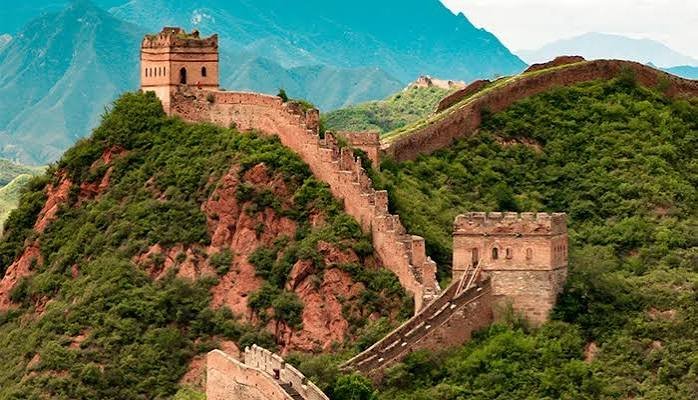
Great Wall of China is one of the most impressive structures ever built. It stretches across northern China and was constructed and rebuilt over many centuries by different Chinese dynasties. Although often described as one continuous wall, it is actually a huge network of walls, fortifications, watchtowers, and defensive structures.
The main purpose of the Great Wall was to protect Chinese territories from raids and invasions. Soldiers used watchtowers to observe approaching enemies and communicate over long distances. Fires, smoke signals, flags, and other methods were used to send messages from one tower to another.
Construction of various sections began more than 2,000 years ago. The Qin dynasty connected several earlier walls, while later dynasties, especially the Ming dynasty, built many of the stone and brick sections that tourists visit today.
The Great Wall is also an extraordinary example of human determination. Builders had to work through mountains, deserts, valleys, and difficult terrain. Materials were transported over challenging landscapes, and enormous amounts of labor were required.
Today, the Great Wall is one of China’s most famous tourist attractions. Visitors can walk along restored sections, admire mountain landscapes, and experience a structure that reflects thousands of years of Chinese history.
2. Petra, Jordan
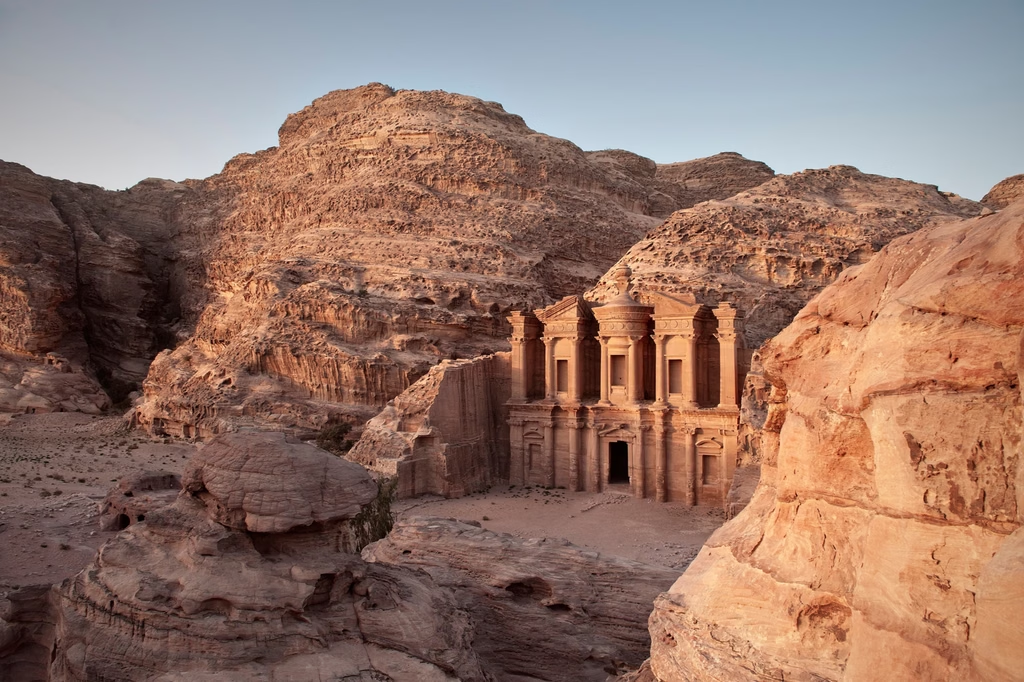
Petra is an ancient city located in southern Jordan. It is famous for its magnificent buildings carved directly into rose-colored sandstone cliffs. Because of its distinctive color, Petra is sometimes called the “Rose City.”
Petra was developed by the Nabataeans, an ancient Arab civilization that became successful through trade. The city was strategically located along important trade routes connecting Arabia with the Mediterranean world. Merchants transported valuable goods such as spices, incense, and textiles through the region.
One of Petra’s most famous structures is Al-Khazneh, commonly known as the Treasury. Visitors reach it through the Siq, a narrow natural rock passage surrounded by towering cliffs. When the Treasury suddenly comes into view at the end of the passage, it creates one of the most memorable sights in the ancient world.
Petra also contains tombs, temples, houses, roads, water channels, and other structures. The Nabataeans developed sophisticated systems for collecting and storing water, allowing the city to survive in a dry environment.
Over time, Petra declined in importance as trade routes changed and natural disasters affected the region. For centuries, much of the city remained relatively unknown outside the local area. In modern times, Petra became an important archaeological and tourism site.
Petra demonstrates how architecture, commerce, engineering, and natural landscapes can come together to create a unique historical city.
3. Christ the Redeemer, Brazil
Christ the Redeemer stands on the summit of Mount Corcovado overlooking Rio de Janeiro, Brazil. With its enormous outstretched arms, the statue has become one of the most recognizable symbols of Brazil.
The statue depicts Jesus Christ with his arms extended outward. Construction began in the 1920s, and the monument was completed in 1931. It was designed by Brazilian engineer Heitor da Silva Costa, with artistic contributions from sculptor Paul Landowski and others.
Christ the Redeemer is made primarily of reinforced concrete and covered with soapstone tiles. The use of small stone tiles helped create a durable exterior and allowed workers to construct the curved surfaces of the statue.
The statue is approximately 30 meters tall, excluding its pedestal, and its arms stretch widely across the sky. Its location is equally important. From Mount Corcovado, visitors can see much of Rio de Janeiro, including beaches, mountains, and the surrounding urban landscape.
The monument has become a symbol of peace, faith, welcome, and Brazilian culture. Millions of visitors travel to Rio de Janeiro every year to see it.
Unlike many ancient wonders, Christ the Redeemer is a relatively modern monument. Its inclusion among the New Seven Wonders demonstrates that extraordinary landmarks do not have to be thousands of years old to become globally important.

6
4. Machu Picchu, Peru
Machu Picchu is an ancient Inca site located high in the Andes Mountains of Peru. Surrounded by dramatic green mountains, it is one of the world’s most famous archaeological sites.
Machu Picchu was built during the height of the Inca civilization, probably in the 15th century. It contains stone buildings, terraces, plazas, temples, and agricultural areas. The exact purpose of the site remains the subject of scholarly discussion, although it is widely believed to have been an important royal or ceremonial complex.
One of the most impressive features of Machu Picchu is the quality of its stonework. Inca builders fitted massive stones together with remarkable precision, often without using mortar. This construction technique also helped buildings withstand earthquakes, which are common in the region.
The location of Machu Picchu is extraordinary. The site sits on a mountain ridge at an elevation of more than 2,000 meters above sea level. Steep mountains surround it, creating a spectacular natural setting.
Machu Picchu was not widely known internationally until the early 20th century, although local people knew of the site. It later became an important archaeological and tourism destination.
Today, Machu Picchu represents the achievements of the Inca civilization and attracts visitors interested in history, archaeology, architecture, and nature.
5. Chichén Itzá, Mexico
Chichén Itzá is one of the most important archaeological sites of the ancient Maya civilization. Located in Mexico’s Yucatán Peninsula, the city was a major center of political, religious, and economic activity.
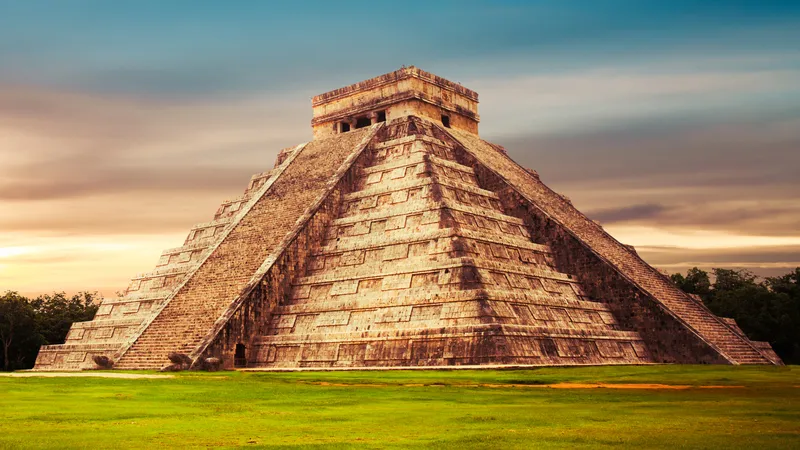
The most famous structure at Chichén Itzá is El Castillo, also called the Temple of Kukulcán. This enormous stepped pyramid demonstrates the Maya civilization’s knowledge of architecture, mathematics, astronomy, and calendar systems.
The pyramid has four staircases, each traditionally associated with 91 steps. When the top platform is included, the total is often described as 365, corresponding symbolically to the days of the solar year.
Chichén Itzá contains many other remarkable structures, including the Great Ball Court, temples, columns, and ceremonial buildings. The Great Ball Court is particularly impressive because of its enormous size and the sophisticated architectural design surrounding it.
The Maya developed advanced systems of writing, mathematics, astronomy, and timekeeping. Their achievements can be seen throughout Chichén Itzá.
Today, Chichén Itzá is an important symbol of Mexican and Maya heritage. It attracts visitors from around the world and provides an opportunity to learn about one of the most sophisticated civilizations of ancient Mesoamerica.
6. Colosseum, Italy
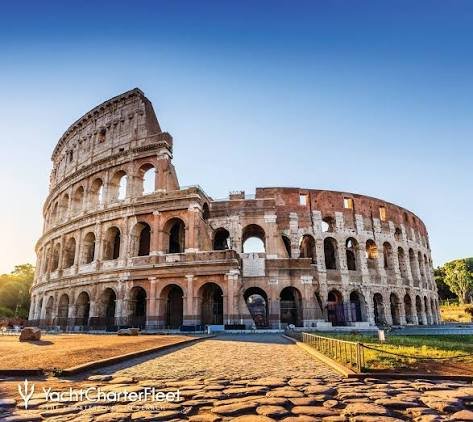
Colosseum, located in the heart of Rome, Italy, is one of the most famous structures of the ancient Roman world. Construction began under Emperor Vespasian around AD 72 and the amphitheatre was completed under his successor Titus around AD 80.
The Colosseum was designed to accommodate enormous crowds. It hosted public spectacles, including gladiatorial contests, animal hunts, and other forms of entertainment.
The building could hold tens of thousands of spectators and featured a complex system of entrances, corridors, seating areas, and underground spaces. Its engineering was highly advanced for its time.
The Colosseum also reflects important aspects of Roman society. Public entertainment was closely connected with political power, social hierarchy, and imperial culture. Different social groups had designated seating areas according to their status.
Over the centuries, the Colosseum suffered from earthquakes, stone removal, and other damage. Despite this, a significant portion of the structure remains standing.
Today, the Colosseum is one of Rome’s most visited historical attractions. It provides a physical connection to the Roman Empire and helps visitors understand the scale and sophistication of ancient Roman architecture.
7. Taj Mahal, India
Taj Mahal is one of the world’s most recognizable monuments and one of India’s greatest architectural treasures. Located in Agra, Uttar Pradesh, it was commissioned by Mughal emperor Shah Jahan in memory of his wife Mumtaz Mahal.
Construction began in the 17th century and involved thousands of craftsmen, architects, artists, and laborers. The main mausoleum is built primarily from white marble and is famous for its large central dome, symmetrical design, minarets, gardens, and decorative details.
The Taj Mahal is particularly admired for its symmetry. The central building is surrounded by carefully planned gardens and reflecting pools. The complex also includes a mosque and a matching building on the opposite side.
The marble surfaces are decorated with delicate carvings and inlay work using precious and semi-precious stones. Floral designs and calligraphy add to the artistic character of the monument.
The Taj Mahal is often described as a symbol of love because of the story behind its construction. However, it is also important as an example of Mughal architecture, which combined influences from Indian, Persian, Islamic, and Central Asian traditions.
The monument changes appearance throughout the day as sunlight and moonlight interact with its white marble. This quality contributes to its visual appeal.
Today, the Taj Mahal attracts millions of visitors and remains an important part of India’s cultural heritage.

6
Why Are the Seven Wonders Important?
The Seven Wonders are important because they represent different civilizations, periods, cultures, and architectural traditions. They show how human societies have created extraordinary structures using the technology, knowledge, resources, and artistic ideas available to them.
The wonders also remind us that history is not limited to one country or continent. The Great Wall represents the long history of China. Petra represents the achievements of the Nabataeans. Christ the Redeemer represents modern Brazil. Machu Picchu reflects the Inca civilization. Chichén Itzá demonstrates Maya achievements. The Colosseum represents ancient Rome. The Taj Mahal reflects the artistic and architectural achievements of Mughal India.
Together, these sites create a global story of human creativity.
Conclusion
The Seven Wonders of the World are much more than beautiful tourist attractions. They are symbols of human creativity, ambition, engineering, art, and cultural heritage. Each wonder was created in a different historical and geographical setting, yet all demonstrate humanity’s ability to build something that can survive for generations.
From the enormous walls of China to the peaceful beauty of the Taj Mahal, from the ancient streets of Petra to the mountains of Machu Picchu, these wonders connect the modern world with remarkable civilizations of the past.
Visiting or learning about these places can help people understand how different societies lived, what they valued, and how they used architecture to express their beliefs and ambitions. Protecting these monuments is equally important because future generations should also have the opportunity to experience and learn from them.
The Seven Wonders therefore belong not only to the countries where they are located but also to the shared cultural heritage of humanity. They stand as lasting reminders of what people can accomplish through imagination, knowledge, cooperation, and determination.